Oral appliance treatment

Mandibular advancement devices for snoring and sleep apnoea

A mandibular advancement device, or MAD, is a custom oral appliance that holds your lower jaw slightly forward while you sleep. We work with several manufacturers and choose the device to suit you, after an assessment.

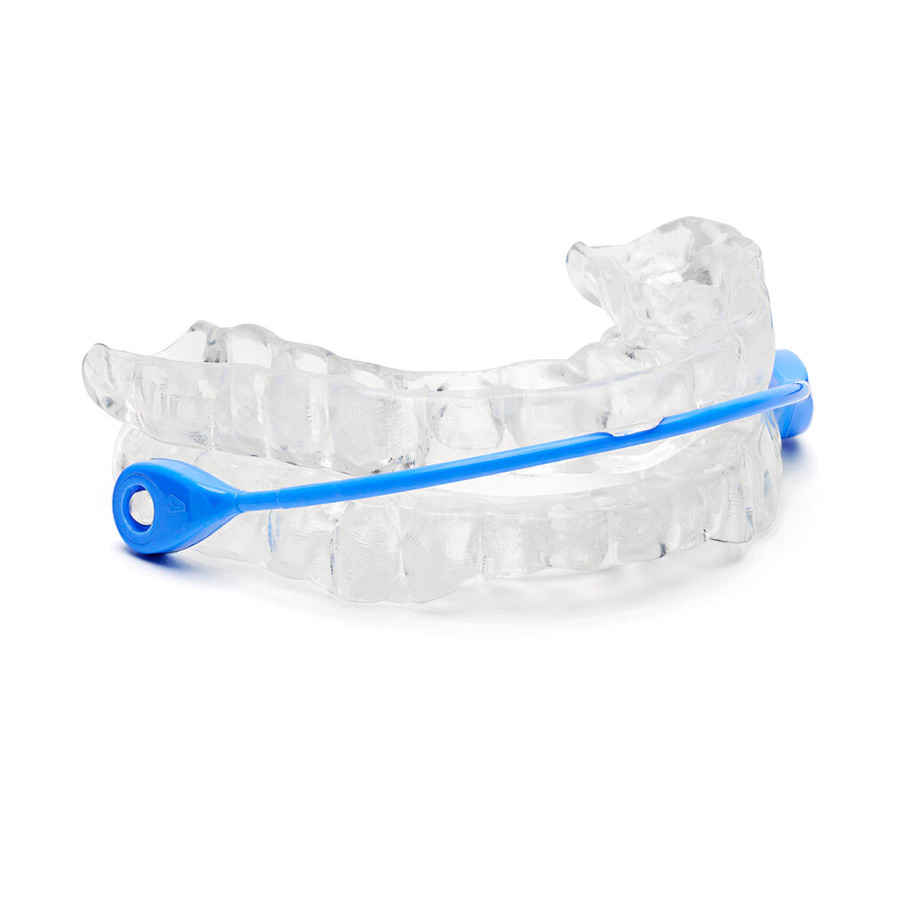
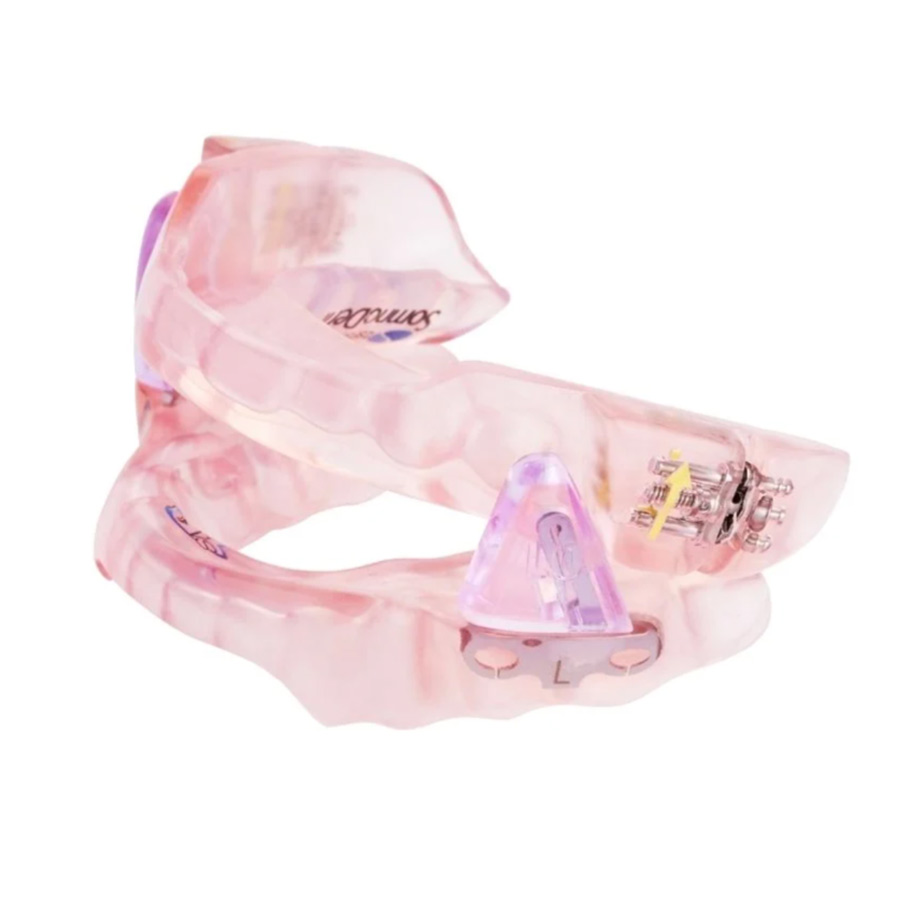
Clear upper and lower trays of a mandibular advancement device, joined at the sides

How a mandibular advancement device works

When you sleep, the muscles around your tongue and throat relax. In some people the airway narrows enough to cause snoring, or closes for short periods, which is obstructive sleep apnoea.

A mandibular advancement device has an upper and a lower piece that fit over your teeth. Together they hold the lower jaw a little forward, which brings the tongue forward and leaves more room behind it. You may also see it called a mandibular advancement splint (MAS), a sleep apnoea mouthguard or simply an oral appliance.

The forward position is adjustable, which is what "titratable" means. We start where the jaw is comfortable and move it in small steps, checking comfort and symptoms as we go.

Custom device or chemist mouthguard

A boil-and-bite guard from a chemist is softened and shaped at home. It has little or no adjustment and nobody checks whether it is working. A custom MAD is made from records of your teeth, adjusts in small steps and comes with follow-up. The two should not be assumed to do the same job.

What results to expect

Results vary from person to person. Many people snore less, and some find their sleep apnoea symptoms improve. Others need a different or combined approach. We agree on goals with you at the start and check the result once the device is adjusted.
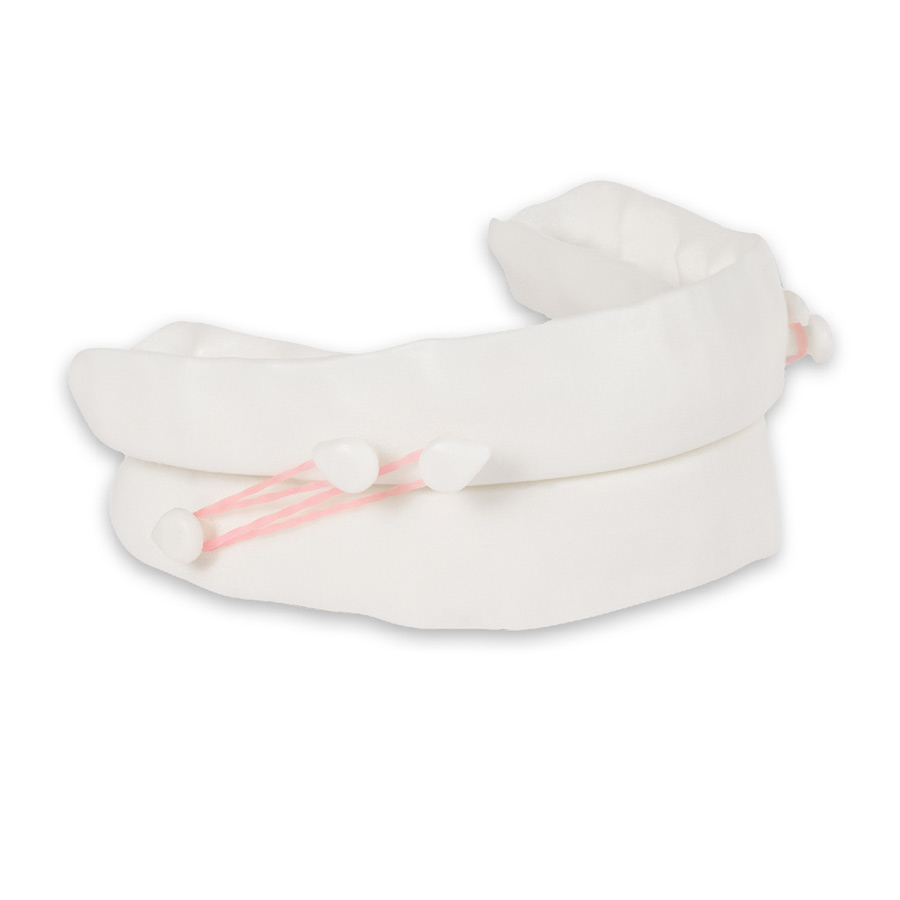
Hushd Pro Auto with upper and lower trays linked by pink elastic bands
Example of a two-piece appliance

It may suit

  • People who snore, after an appropriate assessment
  • Some people with diagnosed mild to moderate obstructive sleep apnoea
  • Some people who cannot tolerate CPAP, in discussion with their care team
  • People who want an option for travel alongside CPAP, on their doctor's advice

It may not suit

  • People without enough healthy teeth to hold an appliance
  • People with untreated gum disease or tooth decay
  • Some people with jaw joint problems
  • People whose sleep apnoea is not the obstructive type

Suitability is decided at an assessment. If you use CPAP, keep using it until your doctor advises a change.

The oral appliances we fit

We are not tied to one brand. Mandibular advancement devices differ in design, material and the way they adjust, and those differences change how a device feels and how it holds up for a particular person. These are the ranges we work with.

SomnoMed

SomnoMed makes acrylic appliances in several designs. We fit four of them.

  • SomnoMed Virtus oral appliance

    New

    SomnoMed Virtus

    The newest SomnoMed design, made for people who have sleep apnoea and also clench or grind their teeth. It works the same way as the Avant, with a clear body and a front strap reinforced by a metal core. Virtus is in a limited release, so only a small number of clinics can supply it for now.

    Often considered for

    People whose sleep apnoea and teeth grinding occur together.

  • SomnoMed Avant oral appliance

    SomnoMed Avant

    Upper and lower pieces joined by a strap at the front. We change the jaw position by swapping the strap for a different length. The strap also helps keep the mouth closed, which supports breathing through the nose.

    Often considered for

    People who tend to sleep with their mouth open.

  • SomnoMed Classic oral appliance

    SomnoMed Classic

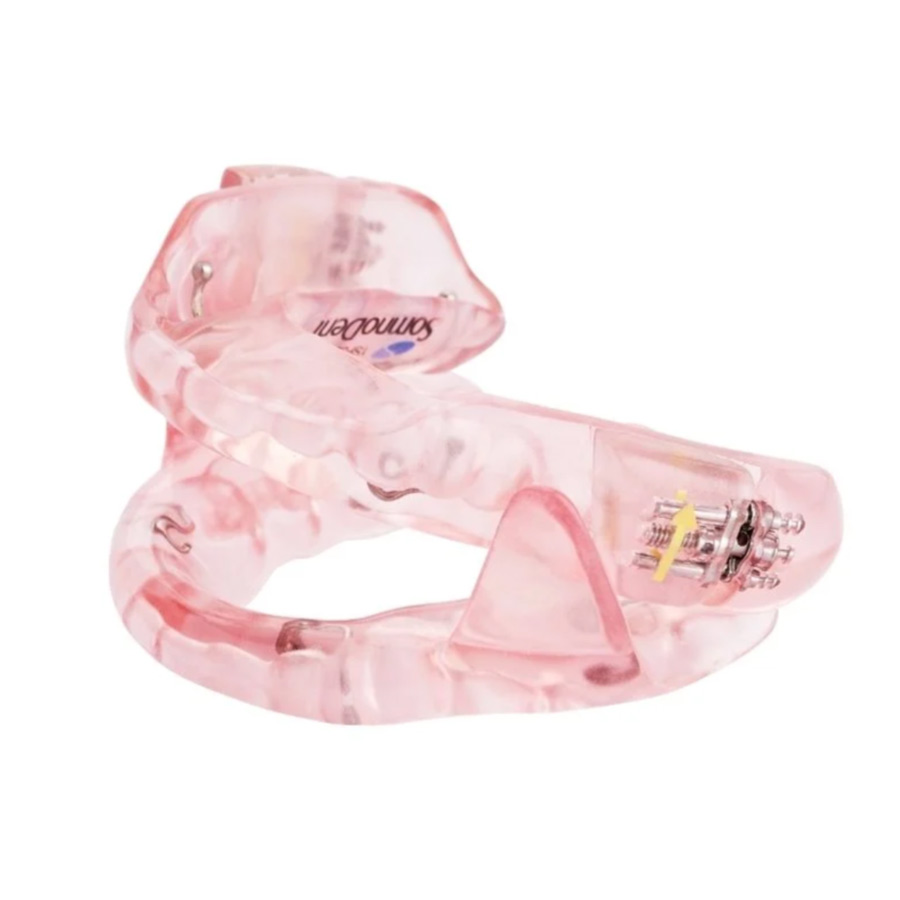
    The original SomnoMed design. Small wings on the lower piece rest against the upper piece to hold the jaw forward, and a screw sets the position. The two pieces are not joined, so you can open your mouth, talk and drink while wearing it.

    Often considered for

    People who want free jaw movement.

  • SomnoMed Fusion oral appliance

    SomnoMed Fusion

    A winged design like the Classic, with a soft inner liner. The wings can be replaced to extend how far the jaw position adjusts.

    Often considered for

    People who may need a wider range of adjustment.

3D Sleep

3D Sleep is an Australian company. Its appliances are 3D printed in nylon and polished smooth.

  • The 3DS Advance oral appliance

    3DS Advance

    A winged design in printed nylon. The upper and lower pieces move independently, so the jaw can open while the appliance still holds it forward. This is the 3D Sleep appliance we fit most often.

    Often considered for

    People who want a nylon appliance with free jaw movement.

  • The 3DS Eclipse oral appliance

    3DS Eclipse

    A compact nylon appliance with connectors at the sides.

    Often considered for

    Narrow dental arches, limited room in the mouth, or a strong gag reflex.

  • The 3DS Connect oral appliance

    3DS Connect

    A nylon appliance that stops the jaw dropping open during sleep.

    Often considered for

    People who sleep with their mouth open.

  • The 3DS Protect splint

    3DS Protect

    A thin nylon splint for teeth grinding. It protects the teeth and does not move the jaw forward.

    Often considered for

    Teeth grinding where the jaw does not need to be held forward.

Panthera

Panthera appliances are made in Canada.

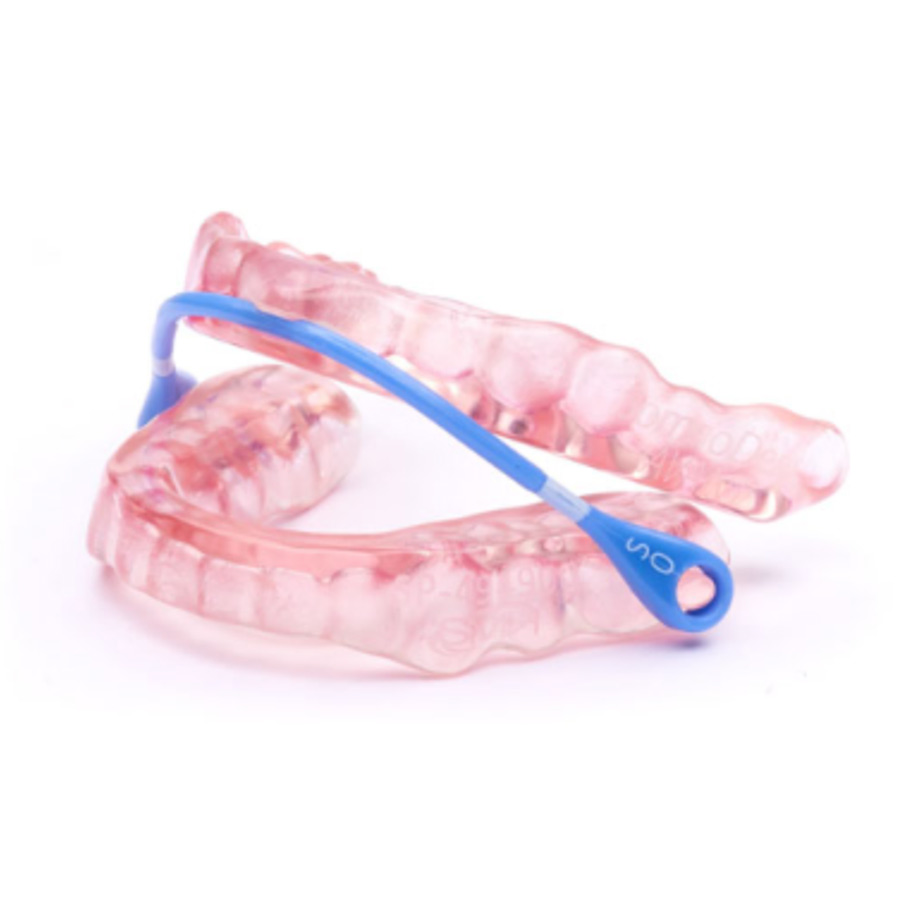
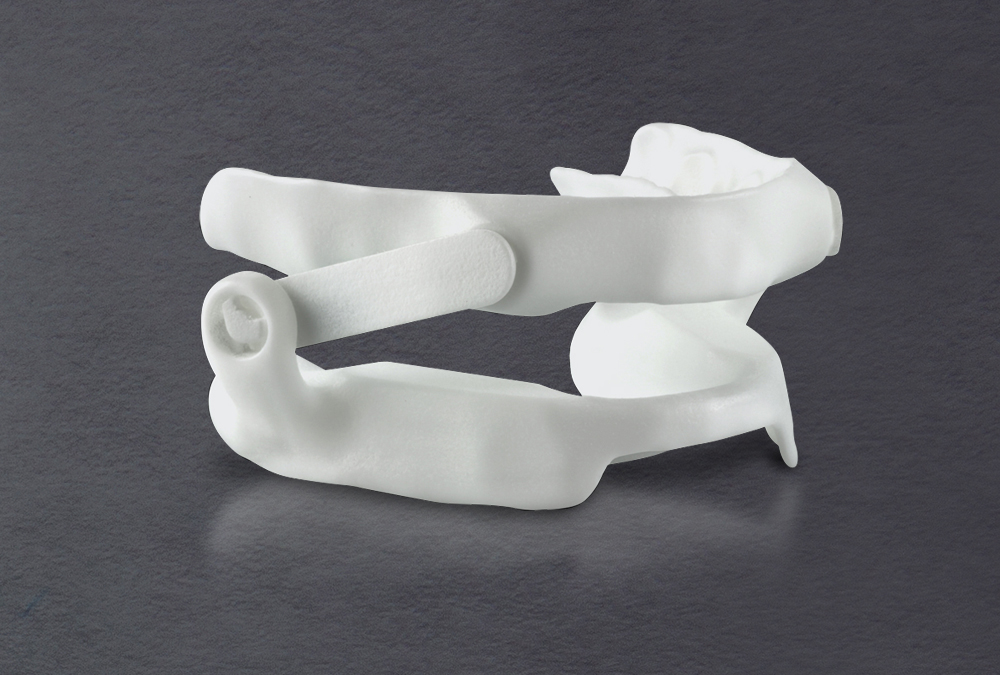
  • Side view of the Panthera D-SAD with a rod joining the upper and lower trays

    Panthera D-SAD

    Printed in medical-grade nylon. The whole appliance is one material, including the connecting rods, with no metal parts. We change the jaw position by swapping the rods for a different length.

    Often considered for

    People who ask for Panthera by name, or who need an appliance without metal.

Which appliance is right for you depends on your assessment. Not every design suits every mouth.

How we choose the right device for you

Fitting everyone with the same appliance would be simpler for us. It would not be better for you. These are the things we weigh up at your assessment.

Your sleep study
The type and severity of your sleep apnoea, and whether it is worse on your back, guide how far the jaw may need to come forward.
Teeth and gums
The number, shape and health of your teeth decide how well an appliance will hold. Crowns, bridges and implants can change the design.
Grinding or clenching
People who grind heavily need a stronger design and material.
How you breathe at night
If your mouth falls open, a design that keeps it closed may help. If your nose is often blocked, you may need room to breathe through your mouth.
Jaw joints and movement
How far and how comfortably your jaw moves forward sets the adjustment range you need.
Room in your mouth
Slimmer designs suit smaller mouths and people with a strong gag reflex.
Cost
Fees differ between appliances. You receive the options in writing before you decide.

What to expect

From first visit to long-term care

An appliance works best with an assessment before it and follow-up after it. This is the usual order of care.

  1. Before your first visit

    Send or bring your sleep study report and any referral if you have them. If you have not had a sleep study, we can explain what is needed and where your GP or a sleep physician fits in.

  2. Consultation and assessment

    We talk through your sleep, symptoms and medical history, and review your sleep study. We examine your teeth, gums, jaw joints and bite, and measure how far your jaw moves forward. You will hear whether an oral appliance is a reasonable option for you, and what we suggest if it is not.

  3. Treatment plan

    We recommend an appliance, explain why we chose it, and give you a written plan with costs. You decide in your own time.

  4. Records for your appliance

    We take a scan or impression of your teeth and record the starting jaw position. The manufacturer uses these to make your appliance.

  5. Fitting

    We check the fit and comfort, and show you how to put the appliance in, take it out, clean it and store it.

  6. Adjustment

    Getting used to an appliance takes time. We move the jaw position forward in small steps, guided by your comfort and symptoms.

  7. Checking the result

    Feeling better is encouraging, but it does not show that sleep apnoea is controlled. A follow-up sleep study with the appliance in place may be recommended, and we keep your GP or sleep physician informed.

  8. Ongoing reviews

    We review the appliance, your teeth, your bite and your jaw joints over time, because all of them can change.

Read the patient info

Good to know

Before you decide

An oral appliance is one option among several. Here is how it compares with CPAP, which side effects to expect, and what we can do with an appliance you already own.

Oral appliance or CPAP

CPAP holds the airway open with air pressure through a mask. It generally controls breathing pauses more completely, especially in severe sleep apnoea. Some people find an oral appliance easier to wear every night.

Talk to your GP or sleep physician about which treatment suits you. Keep using prescribed CPAP until they advise a change.

A woman asleep on her side wearing a nasal CPAP mask

Side effects

In the first weeks you may notice extra saliva, a dry mouth, or tender teeth and jaw muscles on waking. These often settle with time or adjustment.

Over the long term the bite or tooth position can change, which is why regular reviews matter.

A doctor examining a girl's throat

Already have an appliance?

We can check whether an appliance fitted elsewhere still fits and still does its job. That includes older designs such as the MDSA, the Medical Dental Sleep Appliance, and earlier SomnoMed devices.

If yours is worn, loose or broken, we can talk about replacing it. Bring it to your appointment.

A receptionist at a clinic desk

Common questions

Short answers to help you prepare for a conversation about treatment.

Which oral appliance is best?

No single appliance suits everyone. The right one depends on your teeth, jaw, breathing and sleep study, which is why the clinic works with more than one manufacturer.

How is a custom appliance different from a chemist mouthguard?

A boil-and-bite guard is shaped at home and offers limited adjustment. A custom appliance is made from records of your teeth, adjusts in small steps, and comes with clinical follow-up. The two should not be assumed to do the same job.

Do I need a sleep study?

A sleep study is commonly needed when obstructive sleep apnoea is suspected or treatment is being planned. The appropriate pathway depends on your history and existing diagnosis, and may involve your GP or sleep physician.

Can a MAD cause jaw discomfort?

Some people notice temporary jaw, tooth, or muscle discomfort, particularly while adapting. Persistent symptoms, bite changes, or other concerns need review. Long-term monitoring is part of responsible appliance care.

Can you review an appliance made elsewhere?

Yes. Bring the appliance and any sleep study reports. The clinic can assess its fit and condition and discuss whether to keep, adjust or replace it.

How much does treatment cost?

Fees, inclusions, payment options, and possible rebates are still being confirmed for this website. The clinic should provide a written treatment plan before you decide to proceed.

Read all frequently asked questions

Who you will see

Your clinician

Dr Anam Khan

Dr Anam Khan

Sleep medicine dentist

BSc, Grad.Dip.Sleep.Sc, Grad.Dip.Forensic.Sc, DMD

Dr Khan has more than a decade of experience in dental sleep medicine. She began her career as a respiratory sleep scientist in a hospital, working with patients whose breathing was disrupted during sleep.

She studied psychology and sleep science at the University of Western Australia, where she also earned her Doctor of Dental Medicine. She has worked in both public and private healthcare.

Languages spoken: English, Urdu